Birth And The Nervous System: How Fear, Breathing, Movement And Emotional Safety Influence Labour

Birth is often discussed in terms of contractions, cervical dilation and pain management, yet an equally important part of the experience receives less attention: the nervous system. When a woman enters labour, her body responds not only to physical sensations but also to her surroundings, emotions, previous experiences and sense of safety. Fear may change her breathing, increase muscular tension and make contractions harder to manage, while reassurance, movement and supportive touch may help her feel more comfortable and connected to her body.
Understanding this relationship offers a different perspective on birth preparation. Breathing, yoga, rhythmic movement, music and massage are more than simply ways to relax. They can help women develop awareness of their physical responses and discover practical ways to cope with the demands of labour. But what is happening inside the body, and how much of this is supported by science?
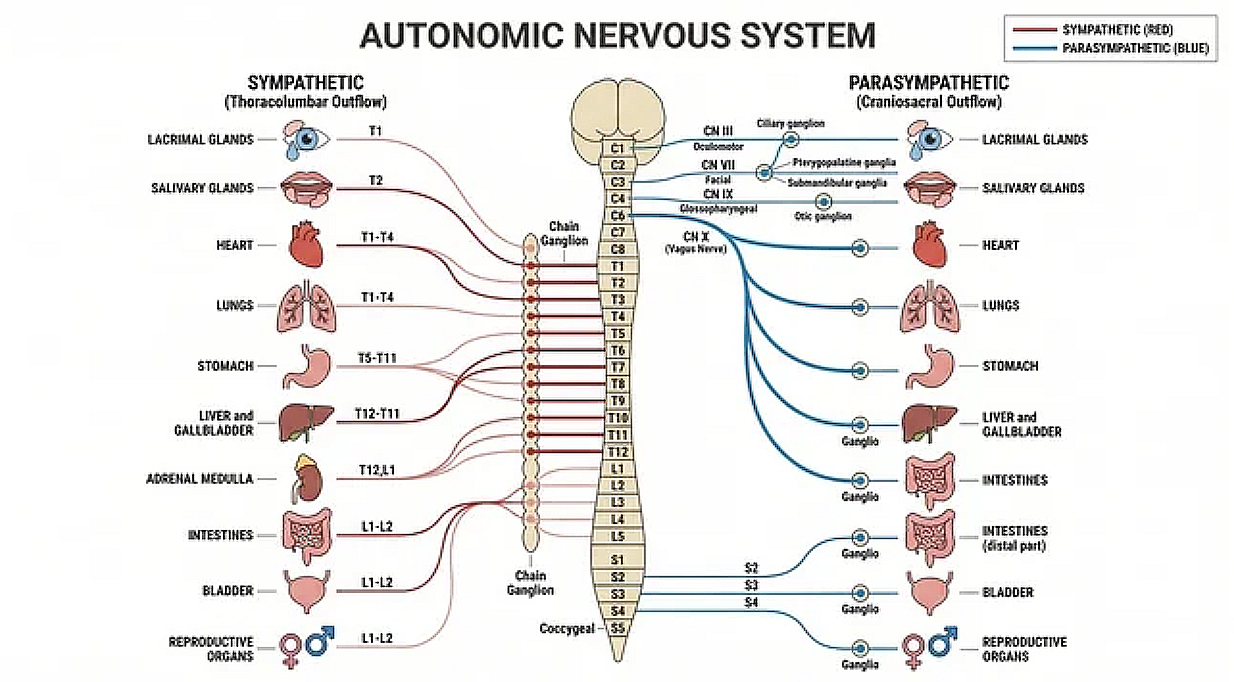
Understanding The Nervous System During Birth
The nervous system is the body’s communication network, constantly receiving information, interpreting sensations and coordinating responses. It consists of the central nervous system (CNS), which includes the brain and spinal cord, and the peripheral nervous system, which connects them with the muscles, organs and tissues throughout the body.
Within the peripheral nervous system, the autonomic nervous system helps regulate processes that happen largely without conscious effort, including heart rate, blood pressure and digestion. Two of its main divisions are particularly important when discussing stress and childbirth.
The sympathetic nervous system prepares the body for action. When we perceive danger or face a physical challenge, it increases alertness, raises heart rate and helps mobilise energy. This is commonly known as the fight-or-flight response. The parasympathetic nervous system supports many functions associated with rest, recovery and digestion, helping the body adapt after periods of heightened activity.
These systems work continuously alongside one another, adjusting their influence according to the body’s needs. Their activity is not limited to being either fully switched on or completely switched off.
This distinction matters during childbirth because labour requires considerable physical effort. A woman needs the physiological capacity to respond to contractions, move her body and cope with intense sensations, while also being able to rest and recover between the contractions, ie. periods of exertion.
Nervous-system regulation therefore involves the flexibility to respond to changing demands. During birth, that may mean becoming physically active during a contraction, relaxing unnecessary muscular tension afterwards, and maintaining enough awareness to communicate needs or make decisions as labour progresses.
What Happens When Fear Takes Over During Labour?
Imagine a woman experiencing an increasingly strong contraction. She feels the intensity building and begins to worry that she will not be able to cope. Her shoulders rise, her jaw tightens and her breathing becomes short and rapid. She may hold her breath or brace against the sensation, anticipating the next contraction before the present one has finished.
These responses are familiar because the body often reacts to perceived danger before conscious reasoning has caught up. When fear activates the sympathetic nervous system, stress-related signalling can increase heart rate, alter breathing and encourage muscular guarding. Attention may become focused on threat, while the brain’s interpretation of pain and discomfort can also be influenced by emotional state.
During labour, this may make an already demanding experience feel more difficult. The relationship is sometimes described through the fear–tension–pain cycle, a concept associated with childbirth educator Grantly Dick-Read. The idea is that fear encourages muscular tension, which may increase discomfort and reinforce further fear.
Although this offers a useful way of understanding some women’s experiences, it should not be treated as a complete explanation of labour pain. Childbirth pain involves uterine contractions, cervical changes, tissue stretching, sensory pathways and numerous psychological and physiological influences. Women can experience severe pain without being afraid, and relaxation does not remove the physical demands of birth.
A prospective study by Adams, Eberhard-Gran and Eskild (2012), published in BJOG, followed 2,206 women intending to give birth vaginally. The researchers found that women reporting significant fear of childbirth experienced longer labour on average. After adjustment for several relevant factors, the difference remained approximately 47 minutes.
The study demonstrated an association rather than proving that fear directly prolongs labour. However, it reinforces the importance of addressing emotional distress as part of maternity care.
Fear may also influence how a woman behaves. Some women become restless and feel an urge to move, while others become very still, quiet or withdrawn. A woman who feels overwhelmed may struggle to communicate or find it difficult to respond to questions, particularly if she has previously experienced trauma, which is something that needs to be divulged and discussed with your birth team prior to labour.
Oxytocin, Adrenaline And The Hormonal Environment Of Birth
To understand the relationship between stress and labour, we also need to consider oxytocin, a hormone involved in uterine contractions, childbirth and breastfeeding. Oxytocin is produced in the hypothalamus and released into the bloodstream through the posterior pituitary gland. During labour, it acts on receptors in the uterine muscle, contributing to the contractions that help the cervix dilate and the baby descend. During labour, uterine contractions help the cervix soften, thin and gradually open. As the baby descends, pressure against the cervix can stimulate a natural feedback reflex that encourages further oxytocin release and contractions.
Its activity is part of a wider hormonal process involving prostaglandins, changes in uterine sensitivity and communication between the mother and her developing baby.
Researchers have also explored oxytocin’s actions within the brain, where it participates in emotional and social processes. Its effects are complex and depend on context, rather than simply creating feelings of love or calm.
In 2019, Kerstin Uvnäs-Moberg, Sarah Buckley and their colleagues published a systematic review of maternal oxytocin levels during physiological childbirth. The researchers examined how oxytocin patterns change throughout labour and discussed their relationship with uterine activity.
Further research by Walter, Abele and Plappert (2021) explored the interaction between oxytocin, stress and childbirth, highlighting how physiological and psychological stress may influence aspects of labour and the early postnatal period.
These findings help explain why researchers and experienced birth practitioners pay attention to the conditions surrounding a woman in labour. If a woman feels threatened, stressed or overwhelmed, her body’s stress-response systems may become more active. These responses can interact with the wider neuroendocrine processes involved in childbirth.
However, the relationship is not as simple as saying that adrenaline stops oxytocin or that feeling safe automatically guarantees efficient contractions. Stress hormones have important physiological roles, and the progression of labour depends on several factors, including the baby’s position, uterine activity, cervical changes and maternal health. It would be inaccurate and unfair to suggest that a woman experiences prolonged labour because she has failed to relax, but it remains a factor.
The Vagus Nerve: How Breathing Supports The Body During Birth
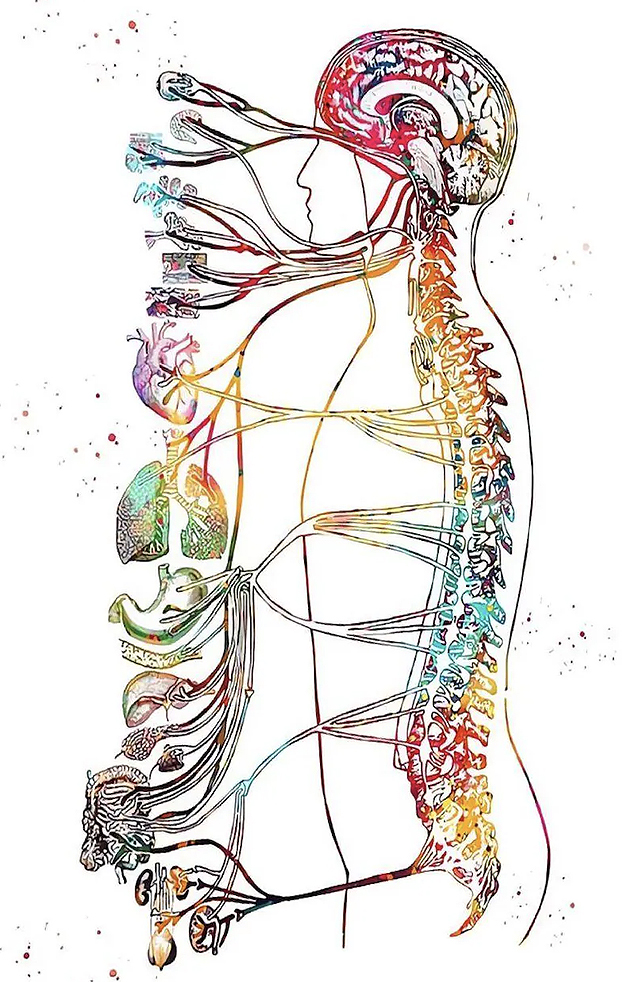
During labour, breathing can become an important way for a woman to connect with her body and respond to the intensity of contractions. The vagus nerve plays an important role in this relationship through its involvement in the parasympathetic nervous system, which helps regulate heart rate, digestion and other processes associated with rest and recovery.
Extending from the brainstem into the chest and abdomen, the vagus nerve carries signals between the brain and several major organs. Its activity is closely connected with breathing, particularly the natural changes in heart rate that occur during inhalation and exhalation. This helps explain why consciously slowing the breath can influence aspects of the body’s autonomic activity.
During childbirth, this connection is relevant because fear and anxiety can change breathing patterns and increase muscular tension. A woman who feels overwhelmed may begin holding her breath, tightening her jaw or bracing against contractions and holding onto baby instead of releasing. Bringing her attention back to a comfortable breathing rhythm can help her recognise these responses, release unnecessary tension and feel more connected to the sensations of labour.
This awareness can also help her turn her attention inward, becoming more responsive to her body’s changing needs. As contractions build and subside, breathing can provide a familiar rhythm through which she finds moments of steadiness, comfort and rest. Alongside privacy, reassurance and freedom of movement, it can support an environment in which she feels safer, more confident and better able to work with her body’s natural processes.
How Breathing Can Help During Contractions
As a contraction begins to build, a woman may instinctively hold her breath, tighten her jaw or brace her shoulders against the intensity. Recognising these responses gives her an opportunity to soften unnecessary tension and return to a slower, more comfortable breathing rhythm. Rather than resisting every sensation, she can begin responding to the changing rhythm of labour, allowing her breath and body to work together.
Some women find comfort in breathing gently through the nose and releasing a long, relaxed exhalation as the contraction develops. Others naturally begin sighing, humming, making low sounds, flubbering their lips like a horse, gently stretching open and relaxing their jaw like yawning, panting or blowing while breathing out. These movements and sounds can provide a focus during contractions, encouraging a sense of release rather than continued muscular bracing. As labour progresses, a woman may discover that different breathing patterns or sounds feel more natural at different moments.
Between contractions, the opportunity to rest is equally valuable. Lying comfortably on her side, with one leg supported by a bolster or pregnancy pillow, may allow her to release tension and enjoy a moment of stillness before the next wave begins. At other times, she may prefer to remain upright, sway her hips, lean forwards or change position while breathing through the sensations in preparation for the next contraction.
A 2018 Cochrane review examined relaxation techniques for managing labour pain, including breathing, yoga and music. The findings suggested that some approaches may reduce pain or improve women’s satisfaction with pain relief.
The UK’s National Institute for Health and Care Excellence (NICE) recommends supporting women who choose breathing and relaxation techniques during labour. Its guidance also acknowledges that breathing exercises help reduce pain during the early, latent stage.
Preparing by becoming familiar with these possibilities during pregnancy can help a woman approach labour with greater confidence in her body’s responses. Rather than concentrating on performing a particular technique, she can listen to what feels comfortable, remain connected to her baby and respond instinctively as labour unfolds. The support of a trusted birth companion can provide reassurance, allowing her to focus on her breathing, movement and the experience of bringing her baby into the world.
Why Movement Matters During Childbirth
Movement has long been part of the way women respond instinctively to labour. Walking, kneeling, leaning forwards, squatting or lying on one side can change the pressure experienced during contractions and help women find positions that feel more comfortable. Unfortunately hospital births are often associated with lying on a bed, for easier medical observation, yet women should be encouraged to move and choose positions that suit their needs whenever possible. Lying on your back prevents the sacrum and pelvis opening and moving freely, which it needs to, to allow baby to enter and exit the pelvic inlet and outlet.
During labour, movement is a natural response to discomfort. A woman may feel drawn to walk, sway from side to side or rock her pelvis. Changing position alters pressure on different parts of the body and makes contractions easier to manage.
Movement also provides sensory information through the muscles, joints and balance systems, helping the brain interpret the body’s changing position. A woman who feels tension building in her lower back may find that pelvic tilts or squatting offers relief. Another may prefer kneeling over a birth ball/on the bed holding the headboard or standing while supported by/hanging on a birth sling/partner(s).
Research supports allowing women freedom of movement when clinically appropriate. A Cochrane review by Lawrence and colleagues (2013) found that upright positions and walking during the first stage of labour, which allows gravity to draw the baby further down, can shorten labour and reduce certain interventions, although study quality and differences between settings limit the certainty of some findings, ie there are nuances and variations.
NICE similarly advises encouraging women to move and adopt positions they find comfortable, while avoiding lying flat on the back. The emotional significance of movement should also be recognised. Being able to change position gives a woman opportunities to respond actively to her body’s needs. For someone who feels vulnerable or frightened, that sense of choice can be particularly valuable.
Foetal monitoring does not always require a woman to remain lying on her back. Depending on the equipment and her individual circumstances, she is able to change positions, sit upright or move comfortably, whilst being monitored. Her birth team can help her explore these options while ensuring appropriate monitoring. Other supportive techniques, such as pelvic circling, gentle rocking or rebozo sifting and shaking techniques, can also be discussed with an appropriately trained practitioner, according to her comfort and preferences.
Rhythm, Music And The Instinct To Move
There is something deeply familiar about responding to discomfort through sound and movement. People instinctively rock distressed babies, sway when listening to music and use repetitive movements to comfort themselves during periods of uncertainty.
During labour, women may discover that rocking their hips, swaying with a partner or listening to familiar music helps them maintain a sense of continuity through contractions. Some find themselves humming or repeating a sound as they breathe out. These responses are not necessarily learned techniques. They may emerge naturally as the woman searches for a comfortable way to cope.
A 2023 systematic review by Hunter and colleagues, published in the International Journal of Environmental Research and Public Health, examined 28 randomised controlled trials involving 2,835 participants. Most, although not all, studies reported reductions in pain or anxiety during vaginal labour or caesarean birth when music-based interventions were used.
The findings suggest that music can be a helpful addition to birth care, particularly when women can choose what they listen to. There is no evidence that one particular rhythm or musical frequency is universally effective. Preferences vary considerably. Some women may find slow instrumental, whale song, water music reassuring, while others prefer familiar songs, stronger percussion or silence.
From Drumming To Somatic Dance: What Can We Learn?
Interest in somatic movement has grown considerably in recent years, particularly through practices involving repetitive music, drumming and free movement.
The term somatic generally refers to approaches that emphasise bodily awareness and the experience of sensation from within. Rather than focusing only on how a movement looks, the person is encouraged to notice how it feels. Rhythmic practices have long been part of cultural, ceremonial and communal traditions. Drumming, chanting and dance have been used to express emotion, strengthen social connection and mark significant transitions in life.
Contemporary research has begun examining some of their possible psychological effects. A 2016 study by Fancourt and colleagues investigated a ten-week group drumming programme involving people using mental-health services. Participants experienced improvements in several measures of psychological wellbeing, although the findings cannot be directly applied to childbirth.
More recently, Emma Marshall, founder of Movement is Medicine, has drawn attention to the relationship between music, movement and emotional wellbeing. Her practice uses rhythm and dance to encourage bodily expression and connection, drawing on her personal experiences and background in music culture.
Marshall’s work is interesting in the context of birth because it challenges the assumption that nervous-system regulation always requires stillness and silence. Some people find calm through quiet breathing. Others feel more comfortable through movement, rhythm and expression.
The application to labour is a practical possibility rather than a proven clinical mechanism. Women who enjoy rhythmic movement before pregnancy often find similar forms of gentle movement reassuring during birth, provided they are comfortable and medically appropriate. The significance of this idea is the freedom it creates. A woman does not necessarily need to sit silently and concentrate on relaxing. She may prefer to sway, hum, rock her body or listen to a rhythm that feels familiar.
Preparing The Body Through Yoga And Somatic Awareness
If breathing and movement can provide comfort during labour, it follows that becoming familiar with them during pregnancy is useful, as it invokes body muscular memory/proprioception, becoming easier to initiate, drop into and sustain. Pregnancy yoga brings together physical movement, breathing, balance and attention to bodily sensations. When appropriately adapted, it can offer opportunities to explore comfortable positions, respond to physical changes and develop confidence in movement and positioning.
For example, someone who repeatedly tightens her shoulders when concentrating may begin to notice this response during a supported yoga posture. Another may discover that she feels more comfortable breathing while moving than remaining completely still.
Research suggests that pregnancy yoga may have benefits, although the quality of studies varies. A 2023 systematic review and meta-analysis by Boopalan and colleagues examined eight studies involving 576 pregnant women and reported reductions in labour pain among women practising antenatal yoga. However, differences between studies were considerable, and the authors called for larger, more reliable trials.
The work of Heather Mason, founder of The Minded Institute, also offers a useful perspective on mind-body practice. The organisation brings together yoga therapy, psychological understanding and contemporary research, including work on trauma-informed approaches.
An important principle of trauma-informed practice is recognising that inward attention does not always feel comfortable. Someone with a difficult history may become distressed when instructed to close their eyes, remain motionless or concentrate intensely on their breathing, as it can trigger unpleasant associated autonomic muscular memory.
During pregnancy, yoga can be adapted to different physical abilities, stages of pregnancy and personal preferences. Women should work with appropriately qualified practitioners, particularly when experiencing pregnancy complications or significant discomfort.
Emotional Safety: Why The Birth Environment Matters
A woman may learn breathing techniques, practise yoga and develop confidence in movement, yet still find labour overwhelming if she feels unsupported or frightened. Bright lighting, frequent interruptions, unfamiliar people, unexpected procedures or a lack of privacy may contribute to distress for some women. Others feel reassured by medical equipment, frequent updates and the visible presence of healthcare professionals. A supportive environment must therefore reflect the individual woman’s needs rather than a predetermined idea of what a peaceful ecstatic birth should look like.
Clear communication is especially important. Knowing what is happening, understanding why a procedure is recommended and having the opportunity to ask questions can help reduce uncertainty.
A 2017 Cochrane review by Bohren and colleagues examined continuous support during childbirth, drawing on data from more than 15,000 women. The findings suggested that continuous labour support may improve women’s birth experiences and several clinical outcomes, including increasing the likelihood of spontaneous vaginal birth and reducing/eliminating caesarean birth.
Such support may involve reassurance, encouragement, practical assistance, massage and helping the woman communicate her preferences. This relationship is sometimes described as symbiotic co-regulation, where another person’s supportive presence helps an individual cope with emotional or physical stress.
A familiar voice, steady touch or someone calmly explaining what is happening can provide reassurance when labour becomes intense. However, support should never become controlling. The woman’s needs may change throughout labour, and a technique that helped during one contraction may feel irritating or overwhelming during the next, depending on the transition of the baby along the birthing canal, eg. hip squeezes cease to be effective and pleasant when the baby enters the pelvic outlet and is about to crown/present.
Touch, Massage And The Connection Between Comfort And Confidence
Touch is another way through which women may experience comfort during pregnancy and labour. Appropriate massage, pressure and physical support can influence how bodily sensations are experienced. Some women find that a hand supplying sustained pressure on the sacrum, hip squeezes, acupressure or massage on the lower back provides relief during contractions, while others prefer gentle touch around the shoulders/hips or just a soft reassuring voice or hand to hold. Consistent communication with mum as to whether this feels good is necessary.
The effects of touch involve sensory information travelling through peripheral nerves towards the central nervous system, where it contributes to the experience and modulation of pain, pressure and comfort. Touch can also carry emotional meaning. When it is welcomed, familiar, respectful and consentual, it may offer reassurance and a sense of connection.
During pregnancy, bodywork from an experienced practitioner helps women address muscular discomfort and explore how their bodies respond to supported movement, touch and relaxation. At Eve Khambatta’s pregnancy massage practice in London, treatments are adapted to the changing physical needs of pregnancy. Her approach incorporates supported side-lying and seated positions, elements of yoga massage, gentle stretching, acupressure, joint mobilisations and attention to the relationship between breathing and movement.
These methods allow women to receive bodywork without remaining in one fixed position, while addressing areas of discomfort that may become more noticeable as pregnancy progresses.
An individualised approach is particularly important because pregnancy changes the way the body carries weight, moves and responds to pressure. The areas requiring attention can vary substantially between women and across the different trimesters.
There is also value in becoming more aware of how the body responds to touch and movement. A woman who notices how her breathing changes when she feels discomfort, or how supported stretching influences muscular tension, may develop greater confidence in recognising her needs in the moment.
Pregnancy massage cannot guarantee easier labour or replace medical birth preparation if needed. However, appropriate bodywork can form part of a broader approach to physical comfort and personal wellbeing, when practised consistently throughout pregnancy, fundamentally influences positive birth outcomes. The same emphasis on individual needs applies to labour, where touch should always remain consensual.
Birth Trauma, Immobilisation And The Importance Of Choice
For women who have experienced sexual abuse, difficult medical procedures or a traumatic previous birth, labour can bring back feelings of fear, helplessness or loss of control. An unexpected examination, unfamiliar touch or being asked to remain in an uncomfortable position can trigger these responses, even when the situation appears routine to maternity staff.
Some women become restless or highly alert, while others withdraw, remain silent or struggle to communicate. Silence should never be mistaken for consent. Unfortunately, despite growing awareness of trauma-informed maternity care, women still encounter situations where their concerns, preferences and emotional needs are overlooked by the hospital environment, which emphasises the need for personalised informed advocacy, which a doula provides.
Breathing, movement and familiar comfort measures can be especially valuable in these circumstances. Even during induced or monitored labour, women can often continue using breathing techniques, vocalisation and different birthing positions. Being connected to monitoring equipment does not automatically mean remaining on a hospital bed on your back, which is highly ill advised due to the inability of the pelvis and sacrum to open fully, and the birth team should explore ways to support mobility and comfort wherever possible.
Preparing for these situations before labour is equally important. Women with previous traumatic experiences can discuss their concerns with their midwife, doula or consultant and include their preferences in a personalised birth plan. Requests for privacy, explanations before examinations, consent before touch and the presence of a trusted birth companion can help everyone understand how best to support the mother.
Ultimately, trauma-informed birth care means working with the woman rather than making decisions around her. Respecting her choices, supporting her body’s natural processes and maintaining clear communication can help her feel safer, more confident and actively involved throughout labour.
How To Prepare For Birth With Greater Body Awareness
Preparing for birth is about more than understanding the stages of labour. It is also an opportunity for a woman to become familiar with her body’s responses, discover what brings her comfort and build confidence in her ability to work with the natural rhythms of childbirth.
During pregnancy, she can begin noticing where she holds tension and how her breathing changes when she feels anxious or uncomfortable. Gentle yoga, pelvic rocking, stretching and supported birthing positions can help her explore movement, develop body awareness and become familiar with positions she may instinctively return to during labour. Practising slow, comfortable breathing alongside these movements can make them feel more natural when contractions begin.
Her birth partner or doula can be part of this preparation, learning breathing patterns and techniques, supportive positions, hip squeezes, massage and ways of offering reassurance. Familiarity with these techniques can help create a sense of trust and connection, allowing the woman to focus on her own sensations while knowing that those around her understand how she wishes to be supported.
Equally important is creating a personalised birth plan that reflects the experience she hopes for. This might include a calm, private environment, freedom to move, preferred birthing positions, the use of water, breathing, massage and other natural comfort measures, and her wishes regarding examinations or medical interventions. Discussing these preferences beforehand with her midwife, doula and consultant allows her birth team to understand her priorities and how best to support them. Women can also discuss procedures such as membrane sweeps beforehand. These should be explained clearly and offered with informed consent, allowing the woman to decide whether they align with her wishes and circumstances.
A birth plan gives a woman a clear voice in her care. Although it is not a legally binding document, the medical profession do read, honour and adhere to her written birth plan and her right to informed consent, to accept or decline proposed interventions remain essential. Understanding her options beforehand can help her ask questions, communicate her wishes and remain involved in decisions throughout labour.
Above all, preparation should help a woman approach birth feeling informed, supported and confident in her body, with a trusted team committed to respecting her preferences and protecting her autonomy.
Giving Birth Time, Space And The Freedom To Progress Naturally
Every woman deserves the opportunity to envision the birth she hopes for. A personalised birth plan helps turn that vision into clear preferences, from a quiet, private environment to freedom of movement, breathing, massage and the presence of trusted birth companions. Preparing in this way can build confidence and help everyone involved understand how she wishes to be supported.
When mother and baby are well, allowing labour sufficient time and space to unfold without unnecessary interruptions can support a natural physiological birth. Privacy, reassurance and the freedom to follow her body’s changing needs can help a woman feel more comfortable as contractions develop. Rather than treating labour as a process that must follow a rigid timetable, her birth team can support its natural progression while remaining attentive to her wellbeing.
The increasing use of medical interventions makes informed choice especially important. According to NHS maternity statistics, caesarean births accounted for 45% of deliveries in NHS hospitals in England during 2024–25, compared with 25% in 2011–12. These figures raise important questions about changing maternity practices, although intervention rates alone cannot tell us which procedures were necessary.
When an intervention is proposed, women deserve clear explanations about why it is recommended, its benefits and risks, and whether alternatives are available. A trusted midwife, doula or birth partner can help her communicate her preferences and participate in these conversations. Previous traumatic experiences should also be discussed sensitively beforehand so the team understands how to provide reassurance if difficult emotions arise.
Medical procedures can have implications beyond birth itself. A caesarean, for example, involves surgical recovery and may affect early mobility and feeding arrangements, making appropriate postnatal support particularly important. These considerations reinforce the value of avoiding interventions without sufficient justification while recognising that timely medical care can sometimes be essential.
Above all, women should feel empowered to work with their bodies, supported by a team that respects their wishes and gives physiological birth the time, attention and care it deserves.
Why Nervous-System Support Should Continue After Birth
Once a baby arrives, attention naturally turns towards the newborn, yet the mother is also beginning a profound period of physical and emotional recovery. Her body is adjusting to hormonal changes, healing from labour and coping with interrupted sleep. Alongside love and relief, she may feel exhausted, vulnerable or overwhelmed, particularly if her birth experience left her frightened or unheard.
For some women, those feelings continue long after they leave the hospital. A 2022 systematic review by Heyne and colleagues estimated that 4.7% of mothers experience childbirth-related post-traumatic stress disorder. Research also links birth-related trauma with negative birth experiences, operative deliveries and inadequate emotional support. The distress is not always about what happened medically, but also how a woman was treated, whether she felt in control and whether her concerns were respected.
Recovery therefore deserves the same thoughtful attention as birth preparation. Time to rest, nourishing food, a breath oriented yin/restorative/meditation practise, pelvic floor strengthening practise, practical support, and opportunities to talk about the birth can help women feel cared for during this transition. Gentle movement, relaxation and appropriate therapeutic massage can also offer physical comfort and days of calm.
At Eve Khambatta’s postnatal massage practice, treatments are adapted to the changing needs of new mothers, providing nurturing touch and support for muscular discomfort, tension, physical and emotional recovery. For a woman who has spent months caring for her growing baby, being cared for herself can feel especially meaningful.
When a birth has been traumatic, emotional recovery also deserves attention. Women should feel able to discuss their experiences, receive compassionate support and access specialist care when needed. Birth does not mark the end of a mother’s need for reassurance, rest and physical care. In many ways, it marks the beginning of a new need for them, as she crosses the threshold into motherhood.
Birth Is Both A Physical And An Emotional Experience
Childbirth is a deeply personal experience, bringing together a woman’s physical strength, emotions, instincts and the support of those around her. For generations, women have drawn comfort from breathing, movement, massage, rhythm and the reassuring presence of trusted companions. These time-honoured practices continue to have a valuable place in birth preparation, helping women feel more connected to their bodies and confident as labour unfolds.
Therapeutic massage, in particular, deserves recognition as more than an occasional treat. Skilled and attentive touch can ease muscular discomfort, encourage relaxation and provide meaningful physical support during pregnancy and labour. Together with freedom of movement, familiar breathing techniques and a peaceful environment, it can contribute to a more comfortable and reassuring birth experience.
Equally meaningful is the relationship between a woman and her chosen birth team. Midwives, doulas, birth partners and other healthcare professionals each have an important role in providing compassionate, individualised care. When everyone works together, listens to the woman’s preferences and respects her birth plan, she can feel more secure and supported in her wish for a physiological birth. Should medical assistance become necessary, clear communication and informed consent help ensure that she remains involved in decisions about her care.
Birth can be and should be an incredibly powerful, joyful and, for some women, even ecstatic ie. an orgasmic experience, which is not uncommon. Every woman deserves the opportunity to approach it with confidence, dignity and the reassurance that her wishes, comfort and emotional wellbeing are genuinely valued.
Ultimately, thoughtful birth preparation is about helping women understand and drop into their bodies by regulating their nervous systems, explore their choices and feel supported throughout this remarkable experience. With compassionate care, practical knowledge and a trusted birth team, women can approach the arrival of their babies feeling informed, respected and empowered.
For more information about pregnancy massage, postnatal support and pregnancy/postnatal-adapted therapeutic bodywork, explore Eve Khambatta’s pregnancy and postnatal massage services in London.
Written by Zainab Farrukh in collaboration with Eve Khambatta
References
Adams, S. S., Eberhard-Gran, M., & Eskild, A. (2012). Fear of childbirth and duration of labour: A study of
2206 women with intended vaginal delivery. BJOG: An International Journal of Obstetrics & Gynaecology,
119(10), 1238–1246. https://doi.org/10.1111/j.1471-0528.2012.03433.x
Boopalan, D., Vijayakumar, V., Ravi, P., Shanmugam, P., Kunjumon, B., & Kuppusamy, M. (2023). Effectiveness of antenatal yoga in reducing intensity of labour pain: A systematic review and meta-analysis. European Journal of Obstetrics & Gynecology and Reproductive Biology: X, 19, Article 100214. https://doi.org/10.1016/j.eurox.2023.100214
Fancourt, D., Perkins, R., Ascenso, S., Carvalho, L. A., Steptoe, A., & Williamon, A. (2016). Effects of group drumming interventions on anxiety, depression, social resilience and inflammatory immune response among mental health service users. PLOS ONE, 11(3), Article e0151136. https://doi.org/10.1371/journal.pone.0151136
Heyne, C.-S., Kazmierczak, M., Souday, R., Horesh, D., Lambregtse-van den Berg, M., Weigl, T., Horsch, A., Oosterman, M., Dikmen-Yildiz, P., & Garthus-Niegel, S. (2022). Prevalence and risk factors of birth-related posttraumatic stress among parents: A comparative systematic review and meta-analysis. Clinical
Psychology Review, 94, Article 102157. https://doi.org/10.1016/j.cpr.2022.102157
Hunter, A. R., Heiderscheit, A., Galbally, M., Gravina, D., Mutwalli, H., & Himmerich, H. (2023). The effects of music-based interventions for pain and anxiety management during vaginal labour and caesarean delivery: A systematic review and narrative synthesis of randomised controlled trials. International Journal of Environmental Research and Public Health, 20(23), Article 7120. https://doi.org/10.3390/ijerph20237120
Uvnäs-Moberg, K., Ekström-Bergström, A., Berg, M., Buckley, S., Pajalic, Z., Hadjigeorgiou, E., Kotłowska,
A., Lengler, L., Kielbratowska, B., Leon-Larios, F., Magistretti, C. M., Downe, S., Lindström, B., & Dencker, A. (2019). Maternal plasma levels of oxytocin during physiological childbirth: A systematic review with implications for uterine contractions and central actions of oxytocin. BMC Pregnancy and Childbirth, 19, Article 285. https://doi.org/10.1186/s12884-019-2365-9
Walter, M. H., Abele, H., & Plappert, C. F. (2021). The role of oxytocin and the effect of stress during childbirth: Neurobiological basics and implications for mother and child. Frontiers in Endocrinology, 12, Article 742236. https://doi.org/10.3389/fendo.2021.742236
Practitioner Resources
Eve Khambatta. (n.d.). Pregnancy and postnatal massage treatments. https://evekhambatta.co.uk/treatments/
Marshall, E. (n.d.). The origin of Movement is Medicine. MIM HQ. https://mimhq.co.uk/the-origin
The Minded Institute. (n.d.). Yoga, trauma and PTSD. https://themindedinstitute.com/yoga-trauma-and-ptsd/